Showing posts with label Products. Show all posts

Thursday, June 1, 2017

Carbon Steel Pans - A Replacement for Teflon?

About 6 months back, there was a lot of hub-bub on the web and in various food media about Carbon Steel (sometimes called Black Steel) pans.

Carbon steel pans are nothing new, actually.  Traditional round-bottom woks are carbon steel and many commercial kitchens use carbon steel saute pans.  Carbon steel has also been a beloved material for chef's knives, though not so much in the home kitchen because it tends to turn a blotchy black-brown color.  But for some reason, carbon steel became visible to the home cook and suddenly, everyone was talking about them.

If you've never seen or worked with one, it's a heavy-gauge steel pan, often with a long steel handle (instead of plastic or silicone).  New, they have a dull gray polished finish.  Once well used and loved, they develop a dark black patina of carbonized polymer that's virtually nonstick, just like your favorite cast iron pans.  The difference is that they're lighter and thinner than cast iron, allowing you to do much of the same things you do with your trusty nonstick skillets like flipping the ingredients around or pouring them out onto a plate without the use of two hands (depending on how large your skillet is).

Interested in this new fad, I put a large one on my Christmas list and sure enough, Santa Claus came through and put this one, recommended by America's Test Kitchen, under my tree.  Around the same time I received mine, I happened to hear a podcast segment on Local Mouthful about how to season, use, and care for them.  There was also quite a bit of advice being put-out by Milk Street, including one tidbit about heating oil in it and discarding the oil before adding new fat to cook with.

So what's the verdict?

After using my pan for several months, I'm happy to report that it works well and has all but replaced my nonstick (ceramic or Teflon-coated) pan.  However, it wasn't without quite a bit of trial, error, and some frustrated fowl language.  Here are my thoughts on the matter:

Seasoning 

This pan was by far more difficult to season than even an unseasoned cast iron pan.  With cast iron, you can jump-start the seasoning by generously coating the pan in vegetable shortening, placing it upside-down on the rack of your oven, placing a tray to catch drips on the rack below it, then removing the smoke detectors (an important step) and cooking the crap out of it.  Wash, rinse, repeat until you have a nice initial layer of seasoning.   You can also roast-up chickens and fatty meats in it.

With the carbon steel pan, not so much.  I tried this method and all I got was a pan coated in a sticky, blotchy mess.  I then had to get out a steel-wool cleaning pad (Brillo or SOS) and scrape all the gunk, goo, and blotchy seasoning.

I also tried this method with the potato peels, which is endorsed by America's Test Kitchen and also came on an instruction card with my pan.  I can't say it worked particularly well for me, but I didn't have standard brown potatoes.  So that may have been a factor.

Unfortunately, the best way to season this pan is to use it and baby it.  The advice Milk Street gives of heating it with some oil, discarding the oil, then adding fresh oil to cook with goes a long way towards this process.  When you're done, immediately scrub it with soap and water, heat it again, and rub a thin layer of oil on it...preferably flax seed oil.  Let it heat a bit more til it smokes, buff out the finish, then store.  If you do this for dozens of uses, it'll gradually build-up a nice seasoning.

Appearance 

I'm not going to lie.  This pan is going to look ugly for a very long time before it gets to that nice dark patina all over.  For some reason, it seasons in a very blotchy way, so you get areas where it looks like you've damaged the pan and areas where it still looks new-ish.  Keep at it and it'll eventually all start to blend into a muddled brown/black.  But it might take up to a year or so.  Mine still isn't there, yet.  I do think part of this problem is that I have a glass-top electric stove and the pan heats very unevenly.  If you have gas, you may not have as much of a problem with this.

Nonstick Ability 

I think the turning point was when I realized that this pan is not nonstick on its own.  You can't just spray it with cooking spray, toss in an egg, and fry it up like you can with Teflon.  This pan works in conjunction with a fair amount of oil to provide its nonstick properties, even after it's fairly well seasoned.  Check-out this video I did early on of eggs sliding around on a nice thin grease slick.  I don't think I could do this even in my best-seasoned cast iron pan or my Teflon pan.


Cleaning

What it DOES do over time is start to release caked-on gunk easily when being washed.  For example, I often make "cheesy eggs" for the family (scrambled eggs with American cheese melted into them).  If you've ever made these, you know that the cheese and egg protein bakes-on hard to the pan surface...even Teflon and needs to be soaked to get it off.  Once my pan had been sufficiently seasoned, this is what it looked like after cooking a batch of 6 eggs with 3 slices of cheese in them:


Not a lot of soaking or scrubbing to be done there.  I like to use one of these blue Scotch-Brite scrubbing sponges, which are specifically made so they won't scratch Teflon coatings.  They don't scratch my hard-earned seasoning, either.  Any regular dish soap will work fine as long as you don't use an abrasive scrubber.

Be sure to dry the pan well and re-season often (using the oil, heat, buff method above) before storing.  If you don't dry it well, it will leave rusty rings on whatever surface you put it on, which isn't good for your pan or your counter top.


What Not to Do

One of the selling points of carbon steel is that it can safely go from stove top to oven.  While that's technically true, I wouldn't recommend doing it with anything that has a sticky finish or anything that will overbrown on the bottom.  I did it with a honey-based glaze and I ended-up ruining my finish trying to get it off and had to re-season the pan all over again.

If you're going to use carbon steel in the oven--especially before it's entirely black, stick to thin pieces of meat, fritattas, and other things that will be in there a short time and don't have a lot of sugar.


The Bottom Line

The bottom line is that I have grown to love this pan.  It takes some getting used to and a bit of finesse to get it seasoned-enough to work with, but once you get it right, you'll love it and keep reaching for it over and over again.

Disclaimer: I'm now a member of the Amazon Associates program, in which Amazon will share a small portion of their profits with me if you buy anything on Amazon from one of the above links.  All of the products I've linked to, I've purchased or received as a gift and my opinions are my own.  I fully support your seeking-out a local source for all items, but if you do choose to purchase from Amazon, it helps support this blog and I thank you.

Saturday, December 17, 2016

My Favorite Things: Magnetic Paint Primer

Back in 2011, I was inspired by Oprah's "Favorite Things" episode to do my own version highlighting some of my favorite kitchen and cooking-related items that make great gifts during the holdays.  This year, I've decided to expand the idea to include some general household and organizing items that I find useful or indispensable.  Happy Holidays!

Today's favorite thing is kind of crafty.  It's called magnetic primer for painted walls.


Photo borrowed from The Interwebs since our project isn't done yet ;-)

Awhile back, my wife and I decided to renovate a small nook in our dining room into a "Family Central" with a small writing desk, a laptop, and some sort of wall-mounted paper-hanging device to keep track of the various bits of paper and things we need to track the family's activities and obligations.  We didn't really want a chalkboard wall, a whiteboard, or a cork board, so what could we use?

I'd remembered seening a Rustoleum product used on This Old House that was a primer filled with iron shavings.  You simply paint several coats on the wall and then go over it with your regular latex paint.  The end result is a section of wall that looks entirely normal except magnets will stick to it.  Brilliant!

It turns out the Rustoleum product has pretty bad reviews.  People report it is hard to work with, requires paint thinner cleanup, and magnets don't stick very well.  I found another product by MagnaMagic that's much more expensive but had much better reviews and cleans-up with water.  Win-win!

Unfortunately, we haven't finished the project yet, so I can't show you a photo.  But I did put a little on a paint stirrer and I was impressed by its magnetic power after only a single coat dried.  I think it's going to work really well!

You could really get creative with this stuff.  Paint small sections of it on objects and you can stick magnets to them.  Make children's toys and learning devices with little sheets of wood.  I've considered putting it on a couple of doors at kid height so my daughter will stop putting scotch tape all over the woodwork.  I've also thought that a few carefully-placed stripes of it horizontally all the way around a teenager's bedroom or a classroom might make it easier and less-damaging to hang posters and artwork without thumbtacks or tape.  Every wall would be a hidden gallery wall.

Disclaimer:  All opinions on these products are my own and I've purchased these items myself or received them as gifts from friends and family.  I don't even receive a kickback from Amazon for the links, so feel free to buy from your favorite local kitchen supplier.  They'll appreciate the business!

Friday, December 16, 2016

My Favorite Things: Joy Tea

Back in 2011, I was inspired by Oprah's "Favorite Things" episode to do my own version highlighting some of my favorite kitchen and cooking-related items that make great gifts during the holdays.  This year, I've decided to expand the idea to include some general household and organizing items that I find useful or indispensable.  Happy Holidays!

I'm a daily tea drinker and I go through phases where I'll drink fancy or flavored teas and then revert back to plain old supermarket black tea for awhile.  I generally don't like fruit or herbal teas that have no real green or black tea in them.  One thing I seem to never tire of, however, is a blend called "Joy" that is available at Starbucks every holiday season.

Joy is not your typical Christmas blend of cinnamon and spices.  Instead, it's a blend of Black, Green, and Oolong teas with a hint of apricot essence.  I absolutely love this as an everyday drinking tea.  Unfortunately, when it first came out, it was made by Tazo (owned by Starbucks) and was only available in Starbucks and only during the holiday season.  When Starbucks bought Teavana about two years ago, they had Teavana re-blend it (it tastes even better) and sold it for a higher price-point under the Teavana brand, still only at Starbucks and occasionally, you could find it on Amazon.

I fully admit to splurging and stocking-up on this stuff every year so I could drink it well into the summer before I'd run out (it makes a great iced tea, as well!).  Then, I'd have to wait till it showed-up in stores again.

As it happens, I'm not the only one who loves Joy, so Teavana took the same recipe, renamed it "Rev Up Wellness Tea" and started selling it by the ounce in their retail shops year-round!  It also appears they're selling it under the Joy moniker in Teavana stores and online this holiday season.

Disclaimer:  All opinions on these products are my own and I've purchased these items myself or received them as gifts from friends and family.  I don't even receive a kickback from Amazon for the links, so feel free to buy from your favorite local kitchen supplier.  They'll appreciate the business!

Thursday, December 15, 2016

My Favorite Things: Bar Mops

Back in 2011, I was inspired by Oprah's "Favorite Things" episode to do my own version highlighting some of my favorite kitchen and cooking-related items that make great gifts during the holdays.  This year, I've decided to expand the idea to include some general household and organizing items that I find useful or indispensable.  Happy Holidays!

When I worked in the restaurant industry, one of the things I got to really appreciate were "Bar Mops."  They're simple white terrycloth towels that are used to wipe-up all manner of spills and kitchen messes, clean countertops, and even serve as makeshift potholders (albeit not as safe).


Bar mops are really a workhorse in the commercial kitchen and replace most of what paper towels usually do in a home kitchen.  The reason they're able to do this is because they're usually provided by a linen company that drops-off a few bundles each week and picks-up the dirty grimy greasy ones to be commercially cleaned so they're as good as new.

It turns out that Bar Mops are easy to get for your home kitchen.  They're usually sold by the stack (6 or more per package) as "Automotive Detailing Towels" in the automotive section of your favorite box store or wholesale warehouse.  At less than 50 cents each, even if they only last a handful of uses, they're still a better bargain than blowing through rolls of paper towels.  Also, they keep the grease out of your good kitchen towels so they stay absorbent for drying dishes.

There is one caveat.  It's difficult to reproduce the cleaning power of a commercial linen laundry when trying to clean your bar mops at home.  I've found that a heavy-duty degreaser detergent like this extremely effective, natural orange oil one from PurePro or less espensive but smellier Simple Green Citrus work pretty well and extend the life of your bar mops.  Just add a quarter cup of the PurePro in place of detergent or a quarter cup of Simple Green in addition to detergent and a half-cup of bleach in the bleach dispensor of your washer.  Wash on warm, not cold or hot.  I typically keep a bucket or a basket in the kitchen just for bar mops and cloth napkins and I do a batch of bar mops when I've accumulated enough.

Disclaimer:  All opinions on these products are my own and I've purchased these items myself or received them as gifts from friends and family.  I don't even receive a kickback from Amazon for the links, so feel free to buy from your favorite local kitchen supplier.  They'll appreciate the business!

Wednesday, December 14, 2016

Favorite Things: Gallon and Half-Gallon Mason Jars

Back in 2011, I was inspired by Oprah's "Favorite Things" episode to do my own version highlighting some of my favorite kitchen and cooking-related items that make great gifts during the holdays.  This year, I've decided to expand the idea to include some general household and organizing items that I find useful or indispensable.  Happy Holidays!

When you get into canning, you very quickly find other uses for the dozens of canning jars you always have lying around the house and you start to realize how truly versatile, eco-friendly, and air-tight a good glass jar can be.

Today's Favorite Things are large gallon and half-gallon storage jars.


One of my favorite uses for these is to keep dry goods fresh and organized in the pantry.  I'll often buy 2 or 3 packages of our favorite crackers or cookies at a time when they're on sale and as soon as the package gets moved from the bulk storage closet to the everyday pantry or kitchen shelves, it gets opened and dumped into a clean jar.  Same goes for beans, cereal, baking supplies, and other dry items that need to be air-tight.  No more miscellaneous-sized boxes, bags, and bag clips!

If you happen to shop in the Whole Foods bulk aisle, these are indispensable.  If your state laws permit it, you can even bring the jars with you to the market and fill them directly from the bins.  Just be sure to stop by the service desk to have them weighed first so you don't pay for the weight of the jar.

I also use them for storing juices, stocks, and liquids in the refrigerator and for organizing and storing candy around the holidays.  My daughter has a huge gallon jar filled with her Halloween stash stored on a shelf within easy reach and out of the way.

Disclaimer:  All opinions on these products are my own and I've purchased these items myself or received them as gifts from friends and family.  I don't even receive a kickback from Amazon for the links, so feel free to buy from your favorite local kitchen supplier.  They'll appreciate the business!

Tuesday, December 13, 2016

My Favorite Things: Electric Kettle

Back in 2011, I was inspired by Oprah's "Favorite Things" episode to do my own version highlighting some of my favorite kitchen and cooking-related items that make great gifts during the holdays.  This year, I've decided to expand the idea to include some general household and organizing items that I find useful or indispensable.  Happy Holidays!

Today's Favorite Thing is a cordless electric kettle.  I like this Hamilton Beach model for its clear glass carafe, affordable price point, and the convenient and easy-to-use design of the switch (which turns-off when the water hits the boiling point).


I don't just use this thing for tea.  It's so fast at heating-up water that I often use it to pre-heat water I plan to boil for cooking (such as pasta), extra water for risotto, and even hot water to top-off the canning kettle.  It's great for making instant oatmeal, softening noodles, preparing instant noodle dishes like Ramen or Easy Mac, or heating water for a pour-over coffee maker like a Chemex.

Disclaimer:  All opinions on these products are my own and I've purchased these items myself or received them as gifts from friends and family.  I don't even receive a kickback from Amazon for the links, so feel free to buy from your favorite local kitchen supplier.  They'll appreciate the business!

Monday, December 12, 2016

My Favorite Things: Meat Grinder

 Back in 2011, I was inspired by Oprah's "Favorite Things" episode to do my own version highlighting some of my favorite kitchen and cooking-related items that make great gifts during the holdays.  This year, I've decided to expand the idea to include some general household and organizing items that I find useful or indispensable.  Happy Holidays!

Ground meat used to be a thrifty cut to feed your family, but not anymore.  Most supermarkets now charge extra for pre-ground meat and you can save up to three dollars a pound if you're willing to buy whole chunks of meat and grind it yourself.  At Whole Foods, for example, it's usually $5.99 per pound for ground dark-meat turkey, but if you ask for whole boneless skinless turkey thighs (which they have in the backroom), they're just $3.99 per pound.

It's for this reason that today's Favorite Thing is the food-grinder attachment for my KitchenAid Stand Mixer.


If you don't own a KitchenAid mixer, there are stand-alone grinder appliances that are comparable in price.  If you don't grind often, you may even consider finding an old hand-crank cast metal model in a consignment shop or antique store.


Disclaimer:  All opinions on these products are my own and I've purchased these items myself or received them as gifts from friends and family.  I don't even receive a kickback from Amazon for the links, so feel free to buy from your favorite local kitchen supplier.  They'll appreciate the business!

Sunday, December 11, 2016

My Favorite Things: Inexpensive Stamped-Blade Knives

Back in 2011, I was inspired by Oprah's "Favorite Things" episode to do my own version highlighting some of my favorite kitchen and cooking-related items that make great gifts during the holdays.  This year, I've decided to expand the idea to include some general household and organizing items that I find useful or indispensable.  Happy Holidays!
 
Today's favorite thing is actually a collection of things.  And those things are inexpensive stamped-blade knives.


The best knife for anyone is the knife you're comfortable using every day.  There's no sense in spending hundreds of dollars on a German-made forged knife if it's not a comfortable extension of your hand.  I've been using inexpensive Rada Cutlery knives for years and every time I try to upgrade to a better (read: more expensive) knife, I find myself gravitating back to my old stamped-blade knife.

And why not?  They're cheap, lightweight, slice nice and thinly, and many of them hold their sharpness better than the best Wustoff carving knife.  Plus, you can get away with using inexpensive manual sharpening devices that take just a little of the soft metal off and bend your blade back to a true point instead of spending money on expensive electric sharpeners or professional sharpening services.

Here are some of my favorites:

Rada Cutlery
My family discovered these at a flea market in Pennsylvania some years ago.  Now, they're thankfully available online.  These are my go-to knives for just about everything.  They also make one of the sharpest vegetable peelers you'll ever own.

The one downside of the Rada knives is that they traditionally came with a "silver" handle that tarnishes easily when exposed to acids.  If you put it in the dishwasher, expect the handle to be permanently black within 2-3 washings.  I left one in a salad bowl once exposed to salad dressing and it also discolored.  They make most of their knives with black plastic handles now, so I recommend buying those when you can find them.
Wustoff Stamped Paring Knives
I happened upon these at Sur La Table as I was at the checkout counter.   They were marked something like 3 for $20.  One thing about paring knives is that they come in a variety of lengths and shapes and you really need to find the shape and length that's comfortable in your hand.  I like a spear-point stamped knife, which is hard to come by.  This one fits the bill and is awesome

Victorinox Stamped Cutlery
Victorinox is world-famous for creating the "Real" Swiss Army Knife, but they also make some pretty darned good kitchen knives, too.  Their commercial-grade stamped knives with plastic handles may not look pretty, but they continually hold their own against $200 knives in product reviews and tests from Cook's Illustrated and other publications.
Manual Sharpener
This sharpener from Rada works excellent on any stamped blade.  It may not look like much, but a few quick swipes every few times you use your knife and it'll slice through a tomato like its nobody's business.  No need for an electric sharpener or a silly honing steel.

Disclaimer:  All opinions on these products are my own and I've purchased these items myself or received them as gifts from friends and family.  I don't even receive a kickback from Amazon for the links, so feel free to buy from your favorite local kitchen supplier.  They'll appreciate the business!

Saturday, December 10, 2016

My Favorite Things: Dashboard Mount for Phone

Back in 2011, I was inspired by Oprah's "Favorite Things" episode to do my own version highlighting some of my favorite kitchen and cooking-related items that make great gifts during the holdays.  This year, I've decided to expand the idea to include some general household and organizing items that I find useful or indispensable.  Happy Holidays!


Today's favorite thing is the iOttie Car Mount Holder for Smartphones.


I have an older vehicle that is equipped with a USB port to play music through the radio but it doesn't handle other smartphone functions like voice dialing and GPS the way modern bluetooth-enabled cars do.

Enter the iOttie dash-mount.  This is a great little gadget.  It comes with a crank-to-tighten suction cup that's assisted by a washable reusable sticky membrane so that it adheres even to the most textured dashboards without damaging it (aside from possible fade spots).  It can also be mounted from the windshield as shown.  It has spring-loaded clips that let you snap your phone in quickly and be on your way.  The arm is adjustable in several directions to accommodate different angled dashes that are close or far away from the driver.

I have this installed in my Honda Fit, which has an awkwardly shaped dash.  When I get in, I snap my phone into the mount, plug-in the USB cable, and head off on my way.  Since it's an iPhone, I can use the hands-free "Hey, Siri," feature to dial, ask for GPS directions, send or have text messages read to me, and use it as a speaker phone.  It's close enough to my face that I can hear the caller through the phone's speaker and the microphone can pick-up my voice beautifully.  No extra gadgets!

I highly recommend everyone have one of these, even if you have a bluetooth-enabled car.  It's a great low-tech way to get some hands-free features out of your phone and keep your hands on the wheel and your eyes on the road.

Disclaimer:  All opinions on these products are my own and I've purchased these items myself or received them as gifts from friends and family.  I don't even receive a kickback from Amazon for the links, so feel free to buy from your favorite local kitchen supplier.  They'll appreciate the business!

Thursday, December 8, 2016

My Favorite Things: Sandwich Knife

Back in 2011, I was inspired by Oprah's "Favorite Things" episode to do my own version highlighting some of my favorite kitchen and cooking-related items that make great gifts during the holdays.  This year, I've decided to expand the idea to include some general household and organizing items that I find useful or indispensable.  Happy Holidays!

My first favorite thing is something I admit to having a love-fear relationship with.  It's the Kuhn Rikon Sandwich Knife.


I ordered this knife after seeing it demonstrated, of all places, on QVC.

Remember those 1980's infomercials for Ginsu knives where they saw through everything including aluminum cans with the knife and then slice a tomato cleanly with the same knife?  This knife is the Ginsu's crazy cousin who invents things in the basement.

I love how this knife has a large paddle shape on one side that just begs to be dipped into a jar of mayo to spread on your bread and a nice sharp blade for not only slicing the sandwich in half when you're done but also for prepping vegetables and fixings that will go in your sandwich.

I need to caution you, though.  This knife is EXTREMELY SHARP.  I'm talking wicked sharp.  I sliced my finger open just trying to put the knife back in its holder (always point the blade away from you when doing this, by the way).  But it's an awesome knife if you treat it with respect and care.  No fancy Martin Yan moves with this one, okay?  Okay.  :-)

Disclaimer:  All opinions on these products are my own and I've purchased these items myself or received them as gifts from friends and family.  I don't even receive a kickback from Amazon for the links, so feel free to buy from your favorite local kitchen supplier.  They'll appreciate the business!

Sunday, January 26, 2014

Choosing a Slow Cooker

I've had my slow cooker since I bought my first condo, so the poor thing is about 9-10 years old.  I didn't pay a lot for it--maybe $25.  It's a basic 6-quart Rival Crockpot brand with a dial regulator with settings for warm, low, and high.  While it has never worked nearly as well as the 1970's avocado green model I found at a consignment shop (I'm kicking myself for not buying the orange/red one I found a week later), it has served its purpose making whole chickens and sitting on buffets.

Unfortunately, you get what you pay for.  The first to go was one of the rubber feet, so it sat at an odd angle on the counter.  Then, I lost the plastic knob on the cover.  That got replaced by a "ghetto fabulous" doorknob.


The last straw was when the carrying handles broke.  Now, it couldn't be moved when hot, so traveling to potlucks was out of the question.

 
So I started to do some research.  I knew I didn't want another Rival.  They're made cheaply.  I also knew I wanted a built-in timer with a keep-warm setting that kicked-in after the cooking time expired.  I was willing to upgrade to a better model, even if it meant paying upwards of $150.  However, most of the nicer name brands (Cuisinart, etc.) had fancy multi-cookers that were so huge and boxy, they wouldn't be good for travel. Also, I was concerned that a model made to sauté (for pre-browning) wouldn't regulate correctly on the slow-cooker setting.  Most had teflon-coated metal inserts, which scratch easily, and the heavy ceramic crock is part of what makes a slow-cooker heat so evenly and efficiently.

I kept coming back to the Hamilton Beach Set 'n Forget 6-Quart Slow Cooker, which before Christmas was selling for under $50.  It had generally good reviews and a great feature set, including:
  • A timer that lets you set in half-hour increments.  Some have presets of 2, 4, 6, 8.
  • A built-in silicone gasket on the lid to keep moisture in while cooking and  liquid in while traveling.
  • Built-in locks for traveling to keep the lid secure.  No Velcro strap or rubber band nonsense like my old one.
  • A probe thermometer that fits through a hole in the lid and will stop cooking a hunk of meat at a certain temperature.
There were a few complaints in the Amazon reviews:
  • Some people reported a defect where the timer would crap-out and they'd come home to cold food.  This seemed to not happen recently and there was a newer model number available, so I opted for that and hoped for the best.  Either way, I'd expect them to honor warranty service.
  • People complained that power outages (other than a flicker) caused the pot to not come back on with the power.  This is, quite frankly, a limitation of any computerized unit that I was willing to accept.
  • People reported the locks getting in the way because they don't fold-down all the way.  Again, I decided this was nit-picking and now that I have it, I agree...it's not a deal-breaker.
I ended-up receiving the pot from my wife as a Christmas gift (Thanks, Honey!) and I'm very happy with it.  So far, I've made red sauce, a whole chicken, the breakfast casserole, and a pot of ham and bean soup (recipe to come soon).  It has worked as advertised and is way more convenient than my old pot.  I highly recommend it.


Sunday, August 7, 2011

So What IS White Whole Wheat Flour, Anyway?

Ever since the "whole grain" movement started a few years ago, you've undoubtedly seen claims on loaves of bread as being made from "white whole wheat."  If you're like me, you've questioned how one goes about making white flour from whole grains as the outside portion (i.e. the "healthy parts) of the wheat grain is nearly always brown.  I wondered, do they have some chemical bleaching process that's probably not good for you?  Is this really just some marketing scam to keep you buying Wonder Bread?

First of all, the US Government won't let you label a flour "whole grain" unless you've ground the flour from the entire kernel--the endosperm, germ, and bran.  For a visual, see this Wikipedia article.  Regular white flour comes from only the white endosperm part of the kernel.  The bran and germ are discarded (or sold separately).

So how do they do it?

First of all, they use a wheat variety that's lighter and color and has a milder flavor to begin with.  They then plant it for harvest in the spring, when it won't be quite as hard as "red winter wheat" (the gold standard for most bread flours and pasta).  The result is a flour that can be ground whole and that will be a slightly off-white color when finished.  Lighter color flour = lighter color bread.

Being very curious and having satisfied myself that it was indeed unbleached whole wheat flour, I finally picked up a bag of King Arthur Flour's  version about two weeks ago.  I've been slowly using it in my pizza and bread doughs as I would regular whole wheat flour (i.e. mixed 30% to 50% with plain white flour) and I have to say I'm quite impressed.  In fact, it behaves much more like white flour than classic whole wheat does in that it doesn't dry things out and produces a decent gluten structure.

I'm thinking I may bite the bullet soon and try it in a dessert like cookies or cake just to see how it turns out.  In the mean time, if you're looking for ways to get more whole grains into your diet and you like to bake, I highly recommend that you pick up a package and start experimenting.

The photo was "borrowed" quite shamelessly from KAF's website.  Hopefully, they're happy that I'm promoting their wonderful products and won't get too upset.  :-)

Tuesday, March 29, 2011

Vinegar Peppers, How I love Thee

There's an Italian restaurant around here by the name of Uncle Tony's that serves a fantastic antipasto salad.  White quite Americanized (it's served over a bed of iceberg lettuce), the spirit of the classic composed antipasto platter is present through the multitude of delicious "things from jars" and "things from the deli" that adorn the nearly meal-like appetizer.  There's marinated mushrooms, artichoke hearts, slices of provolone, salami, and cappicola (spicy ham).  There's albacore tuna, hot pepperoncini peppers, roasted reds, cecci beans (chickpeas), and black olives, just to name a few.

The salad topping my wife and I like the most, however, is a little thing called a "vinegar pepper."  I think you have to be somewhat masochistic in order to love such a food the way we do.  They're nothing more than green bell peppers that have been pickled in an almost straight vinegar solution, but the result is a pucker so tart that it makes your eyes roll up in their sockets.  And then you instantly crave more...  It's sick.  Really, it is.

I'm not one for hot foods.  I usually leave the cayenne, the habenero sauce, and the tobasco to those who thrive on firey heat.  I like to be able to taste the underlying food, thank you very much.  But when it comes to vinegary pickles, sign me up!  When it comes to eating Sour Patch Kids candy by the fistful, I'm your man.  Need someone to polish-off that kosher dill that came with your sandwich?  Give-er-here.  And IMHO, vinegar peppers are the pickle to end all pickles (at least in terms of tartness).

If you're interested in trying vinegar peppers, a company by the name of Pastene imports and sells them.  They're sold in most major supermarkets throughout New England, though I don't know about availability elsewhere.  A good Italian specialty food store may have them.  This summer, I'll be working on a recipe to make your own but my previous attempts were less than stellar.  If I succeed, I'll be sure and post the result.

Sunday, September 12, 2010

The Importance of Water Filters

If anyone tells you your brita water filter is silly and that their water, "Tastes just fine," show them this photo:


That is the whole-house filter from our home after just 3 months of use.  Its original color was pure white.

Granted, we have a well and not city water, but still...  You don't realize how much sediment and crap your water has in it.  Even city water systems, while treated at the source, pick-up "stuff" in the pipes through which it travels to your home.  Plus, a granulated active carbon (GAC) filter like the one found on Brita systems can remove chlorine tastes and odors that may be perfectly okay health-wise but are otherwise unpleasant.

For various reasons, we installed a whole-house filter system that consists of a fiber filter (the dirty brown one) and a GAC filter (the blue one).  The fiber filter picks-up most of the dirt and sediment and the GAC picks-up odors, tastes, microscopic things, and even Radon, which we have a very small amount of in our well water.

Most homes can benefit from an "under the counter" or "point of use" filter on the kitchen sink.  It's similar but doesn't require major plumbing to install.  We had one in our condo and it was worth every penny.

Saturday, March 13, 2010

Product Review: Agave Nectar

Each day, I drink a large cup of tea. And I'm not ashamed to say that I like it sweet. In my 16-oz cup, you'll generally see me shovel in 2-3 teaspoons of white sugar to get it just right. Some people look at it as a sign of weakness. I don't. I see it as a perfectly made cup of tea. You drink your tea your way, I'll drink mine my way.

That said, I also know that my family has a long history of sugar problems and I have a long history with weight issues that I really need to start keeping in check. That said, scoops of fine white powder dumped into my morning tea just isn't a great idea long-term. I've tried all of the commercial sweeteners, unimpressed with the funky chemical after-taste. About the best one I've tried so far is Truvia, one of the new stevia plant based sweeteners, but I still find that it ruins the flavor of the cup of tea that I've grown to love. And I don't subscribe to the, "Oh, you'll get used to it," argument. I don't believe in getting used to something you don't like. What's the pleasure in food if you have to eat stuff you don't find appealing?

Recently, I decided to research and try Agave Nectar:


I've seen agave nectar in the store (usually near the breakfast syrups) and have always wondered about its health benefits. After a big of Googling, I've found that it's made from a succulant plant that looks a lot like an aloe, it's supposedly sweeter than honey, and the main health benefit is that it affects blood sugar levels less than just about any natural sugar sweetener on the market--less than honey or corn syrup. Figuring, "What the heck?" I gave it a try.

First, it's pretty neutral in flavor--something you don't get often in syrup sweeteners. I don't know that I'd personally call it sweeter than sugar or honey, but I can get away with about three good teaspoons of it in my big cup-o-tea. For the most part, it doesn't impart much of its own flavor. There's a very slight vegetal note that comes through more like a tartness, but that's not entirely unpleasant in tea.

All in all, I like it and I think I'll keep using it. If you're looking for something natural to put in your morning hot beverage or to drizzle on toast or pancakes, give Agave a try. I recommend it.

Thursday, February 18, 2010

Product Review: Quick Drying Towels (Eco-Friendly)

If you'll allow me, I'd like to step away from food for a moment and tell you about a great eco-friendly household product that my Mother found this holiday season. The product is a line of bath towels known as Linden Street Quick Dri textured towels. They can be found at JC Penny.

These aren't your ordinary eco-friendly towels, made from bamboo, recycled fibers, or whatnot. They're plain old cotton towels that have been woven in such a way that they're much thinner than your typical luxury bath towel while still being just as soft and fluffy. The end-result is a towel that dries in 33% less time than your average plush towel (according to the manufacturer's claims).

All I can say is, "Wow!" Living in a condo, we have to use coin-op washers and it costs us an arm and a leg to dry our big fluffy bath towels. Plus, it's burning that much more fuel to dry them. Also, traditional luxury towels are much bigger and require more storage space than we have. We just picked-up two sets of the Quick Dri's to try out and they take-up half the physical space of the old ones. If they live-up to their name in the dryer, I'll be thrilled.

Another advantage of the quick-dry towels is that they dry faster between showers, allowing you to use your towel more times before grabbing a new one. If you've ever had a hot, humid bathroom in the middle of the summer where your towel literally doesn't dry between showers, you know what I mean.

We haven't had a chance to use these yet but my mother has and she loves them. I'll keep you posted as to how they work out for us.

Monday, February 15, 2010

Cast Iron: Health Benefits?

Awhile back, I wrote a few posts about some cast iron cookware that I've found in second-hand shops and have been restoring. One of you, my readers, commented that her daughter's doctor recommended cooking in cast iron as a way to get iron into her daughter's diet.

Being the scientific person I am, I was curious if this had any truth to it or if it was just an old wives tale. It didn't make sense to me that a well-seasoned pan would give off that much iron. So, I did some Googling, and here's what I found.

It turns out that cast iron will indeed leach a bit of iron into your food. However, how much iron ends up in your food depends on a combination of how well-seasoned your pan is and what you cook in it.

Seasoning is that shiny black patina that everyone wants their cast iron pans to have. A well-seasoned pan can be as slick as Teflon coated nonstick pans if the pan is well cared for. The seasoning is built-up over time as the oil from the foods you eat chemically bond with the pan surface. In general, the more seasoned your pan, the less actual iron is in contact with the food and the less iron will leach out of the pan into your food while cooking.

The other factor is the food that you cook in the pan. Cast iron reacts with acidic food and will leach into the food much more quickly. That's why most chefs warn against cooking tomato products in uncoated cast iron. The leaching of the iron into acidic foods is so heavy that the foods will have a metallic taste. If you have a really great seasoning on your pan, you can sometimes get away with cooking acidic foods in it. It's not unhealthy to do so. It's simply a matter of personal taste.

So here's the kicker. There are something like only two manufacturers of cast iron cookware left in this country and both only sell "pre-seasoned" pans now. The pre-seasoning process isn't perfect, but it helps you develop a really durable seasoning in your home much faster than if you started with a shiny silver pan. Unfortunatley, since all new pans are seasoned, you're not going to get much leaching of iron into the food.

So the answer is yes, you can use cast iron cookware to get more iron into your diet. However, you're probably not getting anything close to what an iron supplement would give you if your pan is seasoned as it should be.

Monday, February 1, 2010

Social Responsibility - Shopping Locally When You Can't.

This post is one of a series I've been writing tagged as "Social Responsibility" The series focuses on eating and shopping locally, choosing healthier food sources, supporting your local economy and merchants, and learning to do all these things without hurting your budget. I hope you enjoy the posts.

Recently, I wrote a post about shopping locally and buying local products. I'm sure many of you were thinking, "Yeah, easy for you to say. Do you KNOW how much more money you have to spend to shop locally?" Or, perhaps you thought, "But what if I don't have access to locally produced food?"

Well, there are some really great foods in the regular supermarket that qualify as "local" foods in my book. They may not be local in the traditional sense, but they're companies with the same philosophy on food...that you shouldn't compromise quality to make an extra buck. They also contribute to the communities in which they operate and take good care of their employees.

First, a few national brands...

King Arthur Flour
I've personally been up to KAF headquarters and shopped in the company store. Now here's a company that puts its money where its mouth is. They sell nation-wide but still operate out of a timber frame building in Vermont and they're entirely employee-owned. Their flour may be upwards of an extra buck over the store or national brands, but the quality and love that goes into the product makes the extra money well worth it.

Bob's Red Mill
Here in Rhode Island, you can even find Bob's products in discount stores and they're not second quality. Bob's still operates as a small operation in Oregon and you can really taste the difference. Plus, their products tend to be pretty reasonably priced.

Annie's Homegrown
Annie's is perhaps most known for its line of organic boxed Mac & Cheese, but they also make cereal and organic alternatives to a lot of other kid-friendly foods. They still hold true to their core values and still operate out of the Napa Valley area.

Green Mountain Coffee
Even though they're the parent company of Keurig, a device they themselves admit to be not so Earth friendly (they're working on it!), Green Mountain takes planet stewardship seriously in nearly all of their operations. Not only do they produce organic and Free Trade blends, but they go so far as to do things like distribute their coffee bean hulls for use as garden mulch.

Cabot Cheese
Cabot Cheese was started as a farmer-owned co-op and still operates the same way. Even though they ship throughout the northeast, they have let other farms in those states join the co-op.

More Local
Of course, if you look around you, you'll find a lot of locally owned an operated companies that you never even realized were local. Here are just a few I've found in New England:

Marshmallow Fluff
Most people don't realize that Fluff (and the Fluffernutter Sandwich) were born and are still made in Massachusetts. In fact, the state legislature tried to make the Fluffernutter sandwich the "state sandwich."

Cain's Foods
Known for their Mayo and salad dressings, Cains is based in Ayer, Massachusetts.

Pastene
Pastene, importers and distributors of great Italian food, is based in Canton, Massachusetts. Their products are top-quality and delicious.

Autocrat
Autocrat Coffee is based in Lincoln, RI and they still roast all of their beans right there at the main headquarters. In fact, if you drive-by on RI Rte 146 at just the right time of the day or evening, you can smell the roasting coffee.

Supreme Dairy Farms
Located in Warwick, RI, Supreme makes fantastic cheeses, including ricotta and mozzarella.

Rhody Fresh
Rhody Fresh is a collaborative of RI farms who banded-together to produce their own milk brand. When you buy Rhody Fresh, you're supporting local RI cows!

Saturday, January 30, 2010

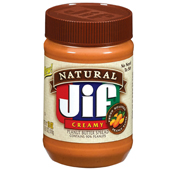
Product Review: Jif Natural Peanut Butter

We all know that you can buy all-natural peanut butter in a tub at the health food store or "Teddy" brand peanutbutter in the megamart. However, most of us grew-up with the sweetened, creamy store brands that don't separate into oil and peanuts when left standing.

Jif recently came out with a "Natural" peanut butter product that I find as-good as regular Jif if not better.

Taste & Appearance: The taste, as I mentioned, is as good if not better than regular Jif. If your kid's palate is good enough to tell the difference, I'll be very surprised. It won't separate like other natural peanut butter but it will get a little glossy on top when left sitting at room temperature. A quick stir of the knife helps before spreading it.

Ingredients: The ingredients are all readable and reasonably healthy. In order to keep it from separating, they use some trans-fat free relatively healthy oils in the blend. The first ingredient is peanuts and it's sweetened with cane sugar and molasses instead of high-fructose corn syrup.

I highly recommend adding this product to your pantry.

Wednesday, January 27, 2010

Product Review: Heinz Organic Ketchup


I think I mentioned awhile back that I bought a bottle of Heinz Organic Ketchup, a new product the manufacturer has come out with to feed the organic and anti-high-fructose-corn-syrup movement. We've now been eating that ketchup for a couple of months and I'm happy to say the product exceeded my expectations.

Taste: In a side-by-side comparison, it tastes incredibly similar to the original product. I doubt any ketchup-loving kid would notice if you swapped it out. The color of it is a bit darker and the texture is a little less glossy, but not in a bad way. I personally thing it tastes better.

Ingredients: Heinz didn't just cheat here and use organic tomatoes with their regular recipe. Every ingredient on the label is a vegetable and it's sweetened with organic sugar rather than corn-based sweeteners. They get extra points for this.

Recommendation: I highly recommend this product. It's about 50 cents to a dollar more than their regular ketchup but it's well worth the price. Pairs just as well with tater tots and chicken fingers as the original recipe.